An heraldic primer - part 2
The origins of heraldry are lost in time but the usual
explanation goes along the lines that coats of arms arose
from the need to identify which side you were on in the
heat of battle. Everyone of substance was wearing full armour
and was thus difficult to identify and so a patterned surcoat
or overcoat was worn over the armour. The surcoat (over
coat) was nothing more than a large rectangular piece of
material with a head hole cut in the centre worn tied around
the waist with a belt or strip of cloth. Hence the name—coat
of arms. However, identifying symbols designating your
team are much more ancient than the times of medieval knights
but usually they had a similar purpose.
Eventually the practice became more formalised and all the
team leaders, the great men of the realms, introduced into
their households heralds whose main role was to maintain
the integrity of the particular symbol of the great man.
At some stage the monarchs saw the potential to manage this
exercise for themselves. Perhaps a number of disputes of
ownership of these symbols or trademarks caused such intervention.
In England the monarch gave this task to the Lord High Constable
and later when this office was abolished, to the premier
duke of the country, the Duke of Norfolk in his role as
Earl Marshal. In Scotland the High Sennachie was given the
task and he was eventually known as the Lord Lyon King of
Arms—a play on the word lion that is the symbol on
the Scottish royal arms.
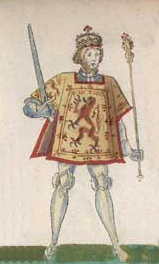
Pictured: James III of SCT wearing a surcoat bearing the
Arms of Scotland. (Rodney Dennys; The Heraldic Imagination,
London 1975 p81)
The task of determining the right to bear a specific coat
of arms meant that these officers had to undertake the study
of genealogy and the recording of family trees.
In the
next issue we will cover the administrators of heraldry.
Graham Jaunay BA DipT MACE AAGRA
Originally published as a series in, Relative Thoughts,
Fleurieu Peninsula Family History Group
|